User Experience Design
Parsons School of Design - The New School
December 18, 2023
In the bustling streets of cities, where the rhythm of traffic never ceases, the challenge of maintaining focus while driving is ever-present. Our project, Ziplink, aims to address the critical issue of driver distraction and cognitive overload, particularly when interacting with in-car systems.
In the bustling streets of cities, where the rhythm of traffic never ceases, the challenge of maintaining focus while driving is ever-present. Our project, Ziplink, aims to address the critical issue of driver distraction and cognitive overload, particularly when interacting with in-car systems. With a focus on enhancing the driving experience for all, especially those new to the roads, our project seeks to integrate innovative solutions into the existing ZipCar app, making it a more comprehensive tool for drivers.
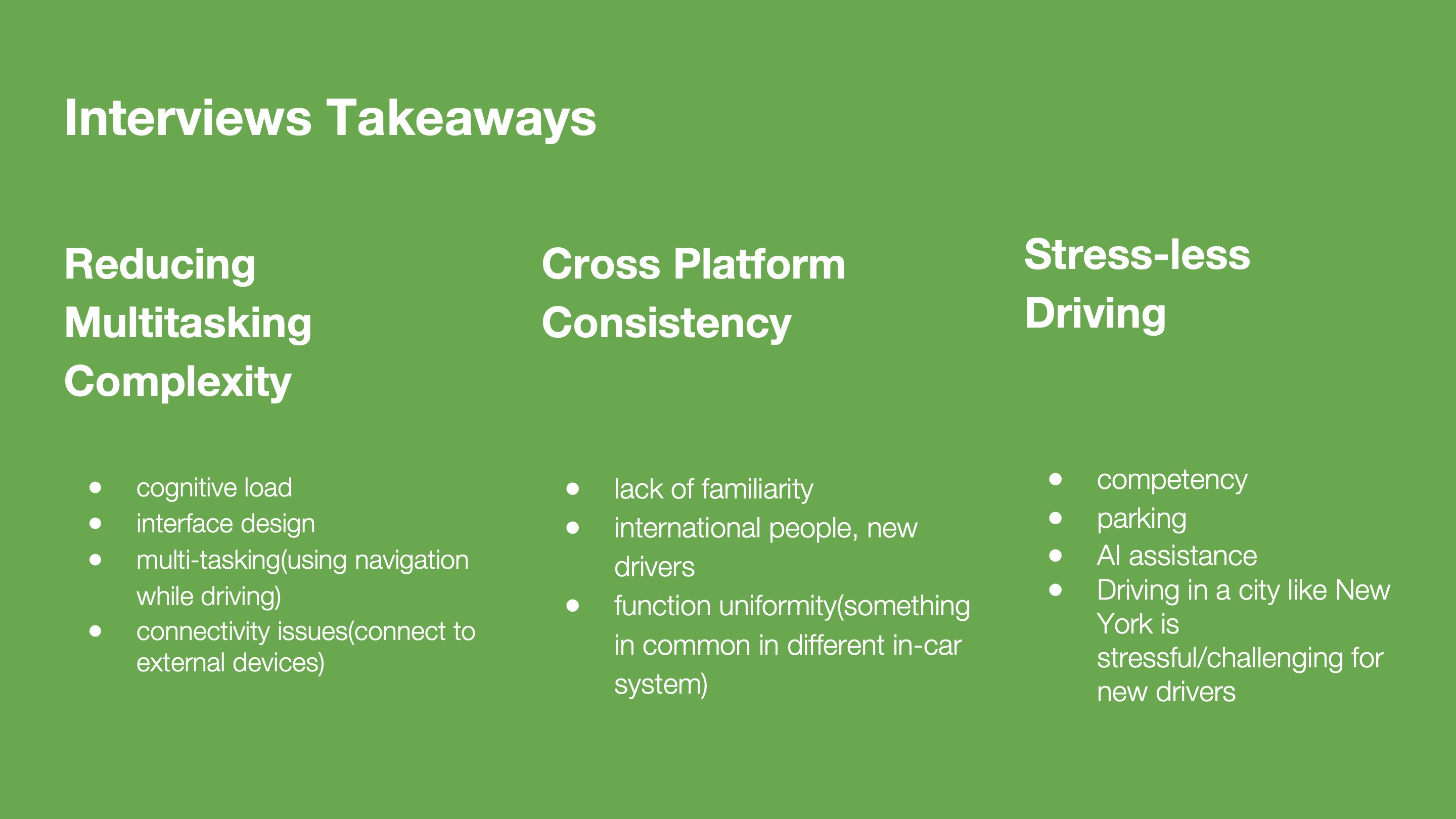
In the current urban landscape, drivers face the significant challenge of minimizing distractions and reducing cognitive load while navigating complex in-car systems. This issue is particularly acute for new drivers, who must juggle the demands of traffic, stress, and the pace of driving, all while interacting with electronic screens and in-car navigation. The danger of dividing attention between the road and these systems cannot be overstated, as it not only increases the risk of accidents but also contributes to a heightened sense of anxiety and discomfort.
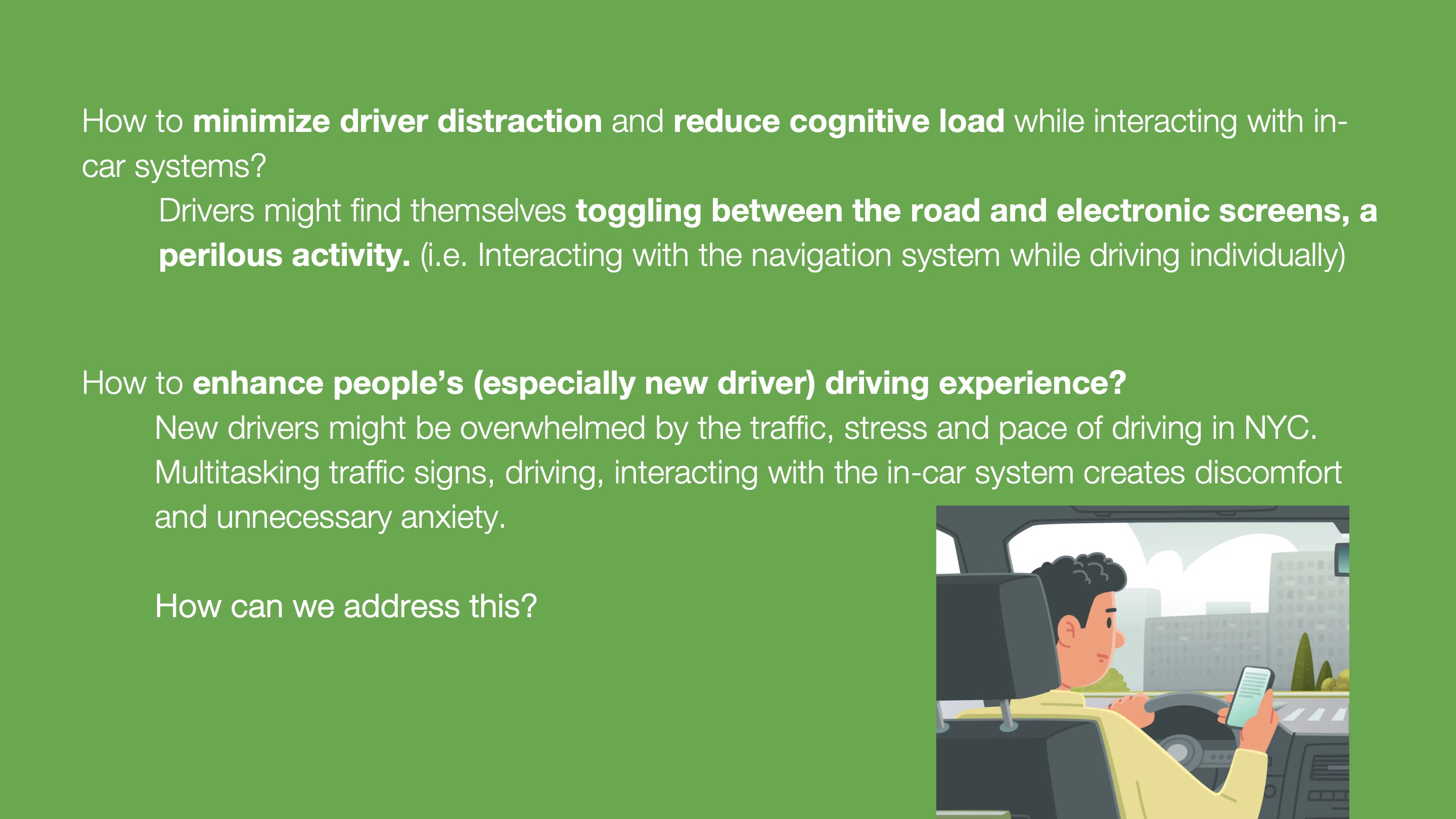
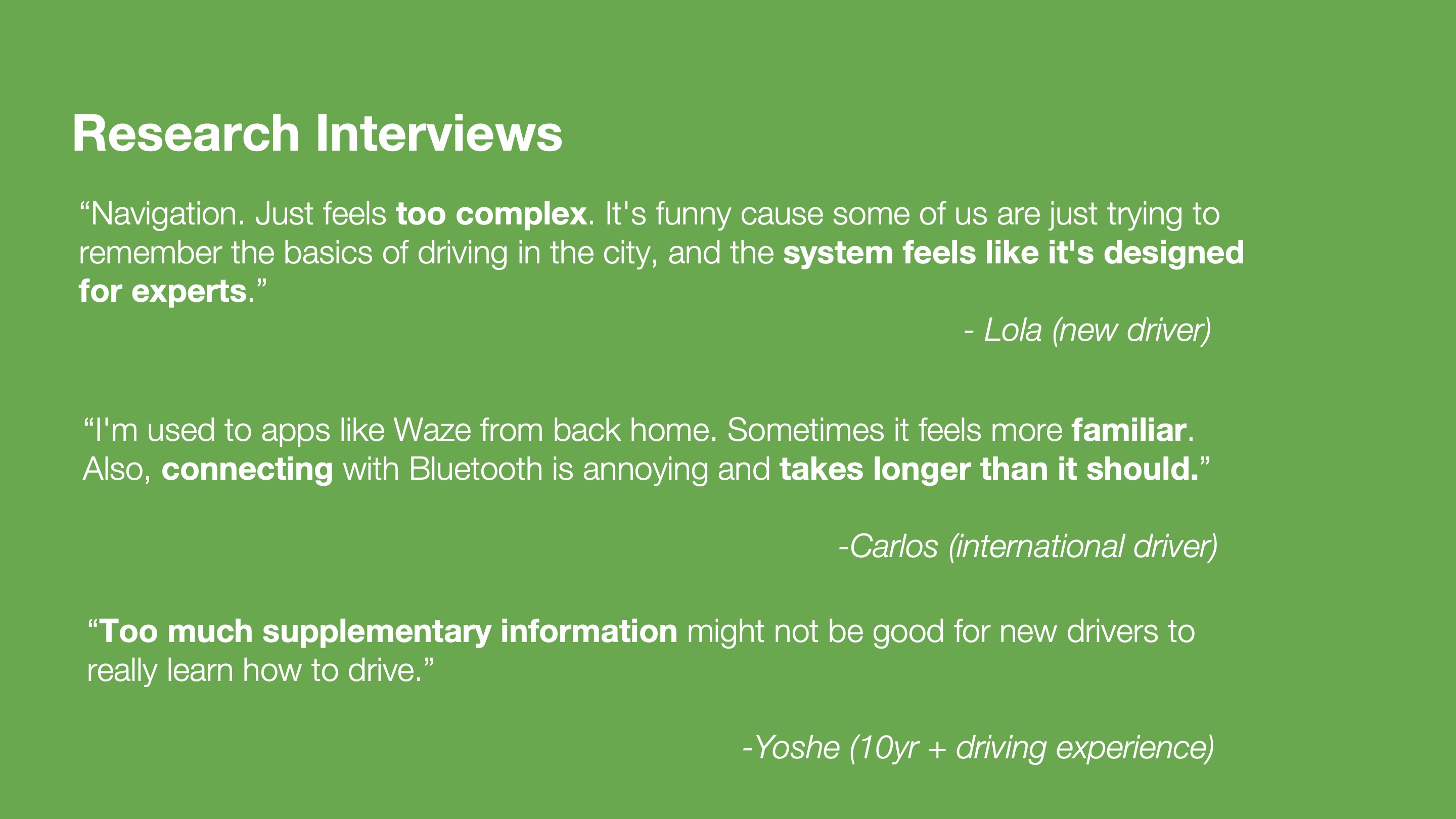
Our investigation into the new driver's driving experience highlights a critical gap in the current in-car system interaction paradigm. Drivers, especially those new to the city's roads, often find themselves overwhelmed by the simultaneous demands of traffic navigation, sign comprehension, and the use of electronic navigation aids.
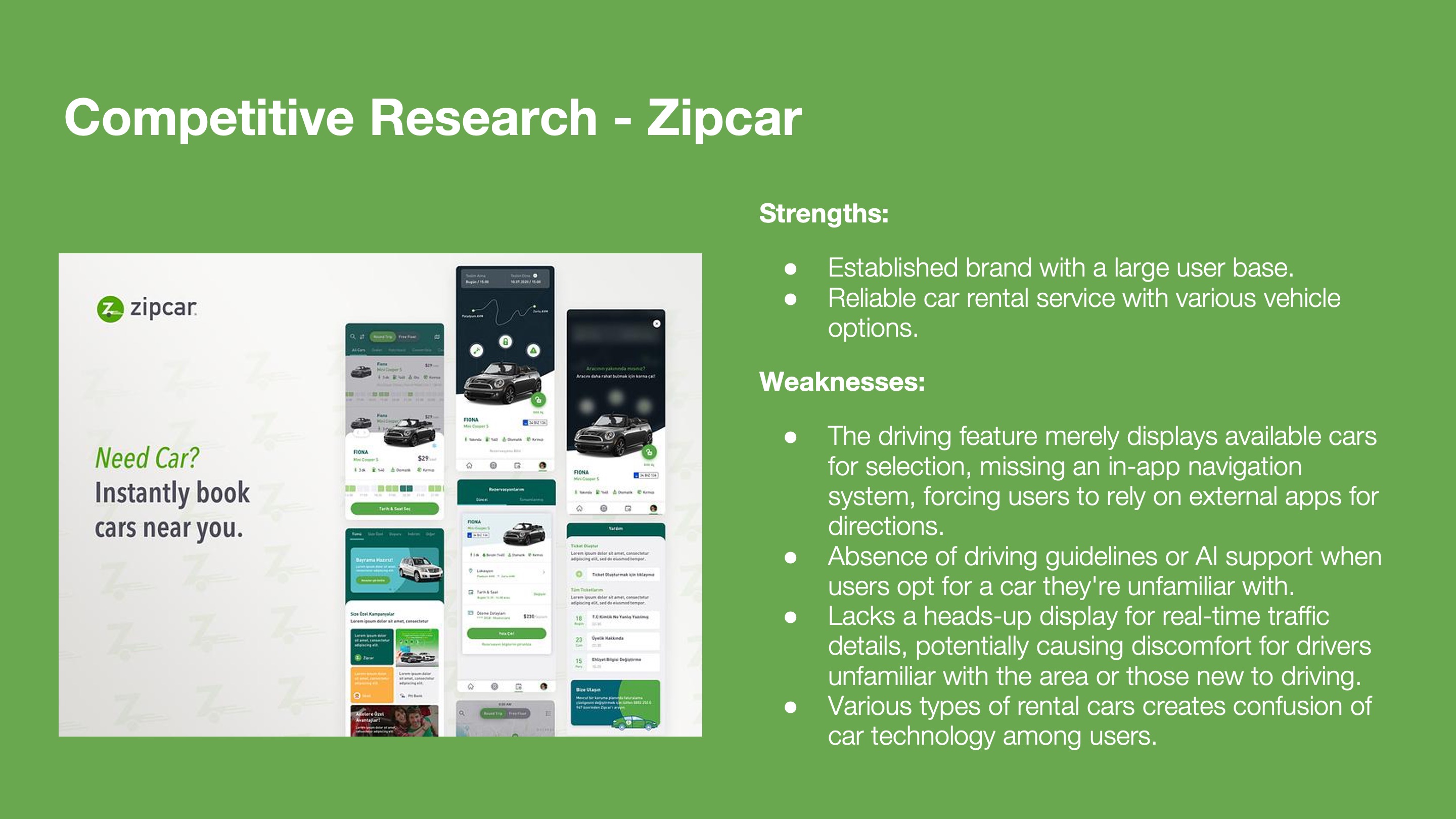
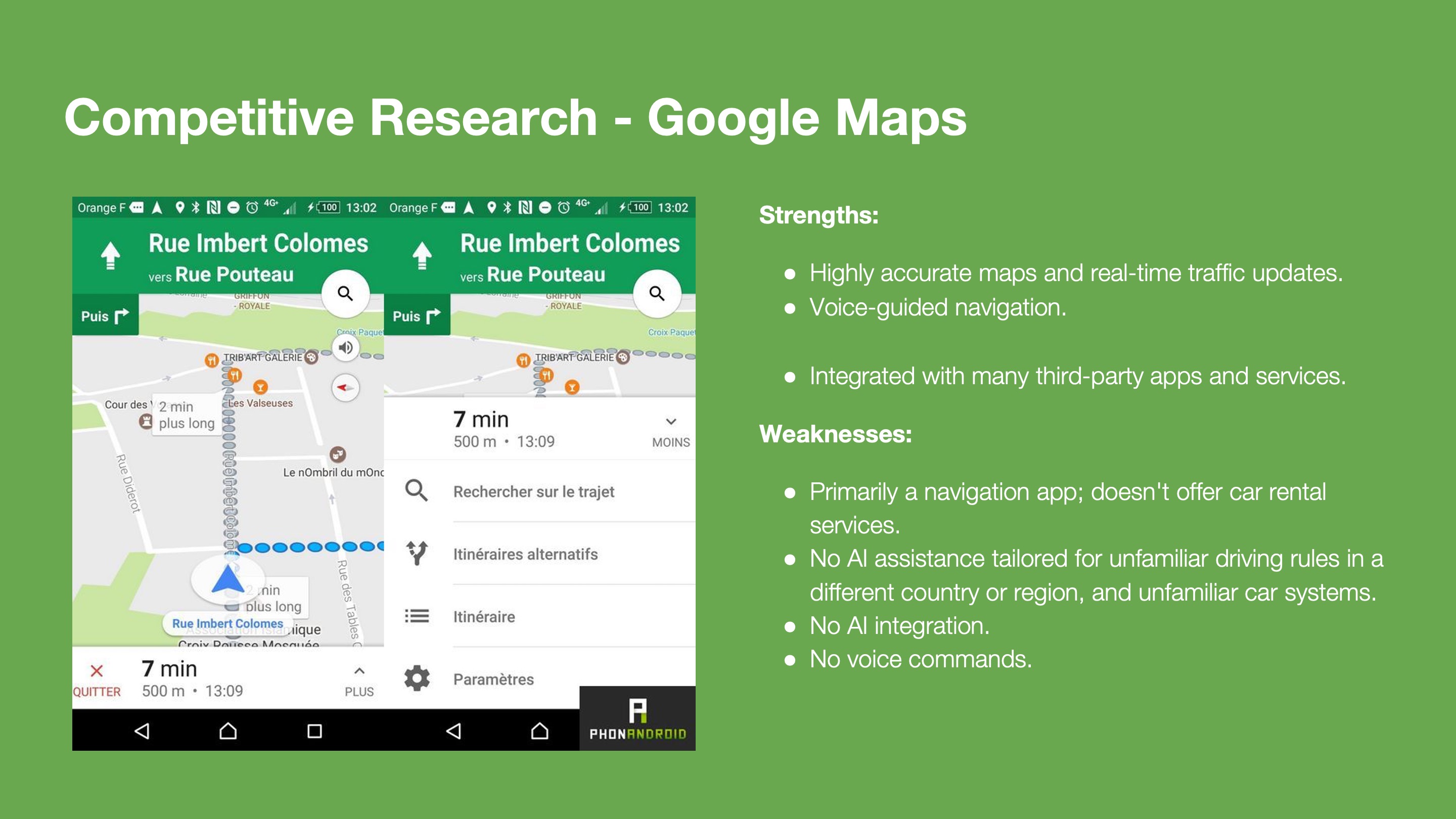
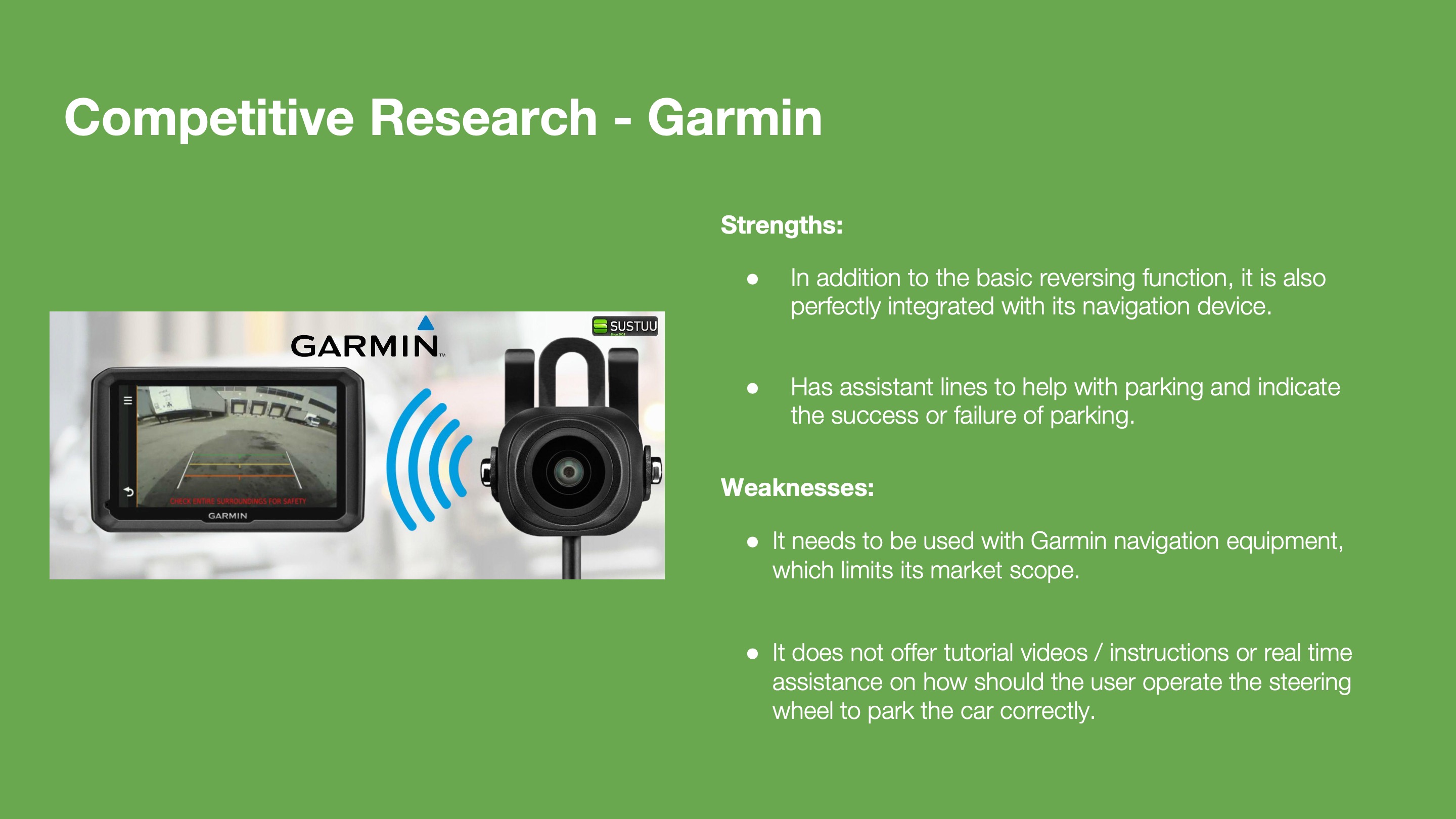
Our competitive analysis focused on Zipcar, Google Maps, and Garmin, identifying gaps in their offerings that impact the driving experience, especially for new drivers in urban settings.
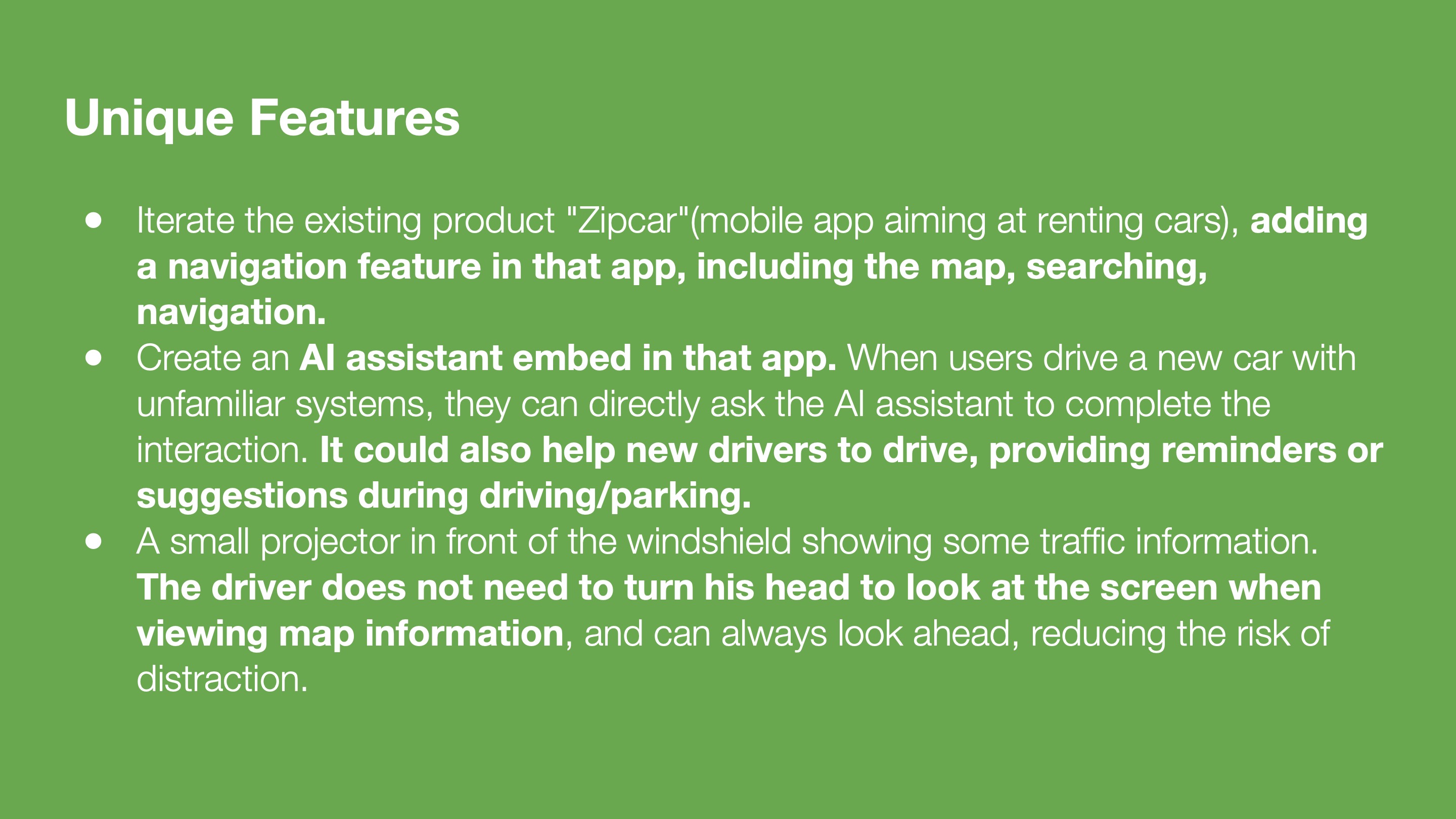
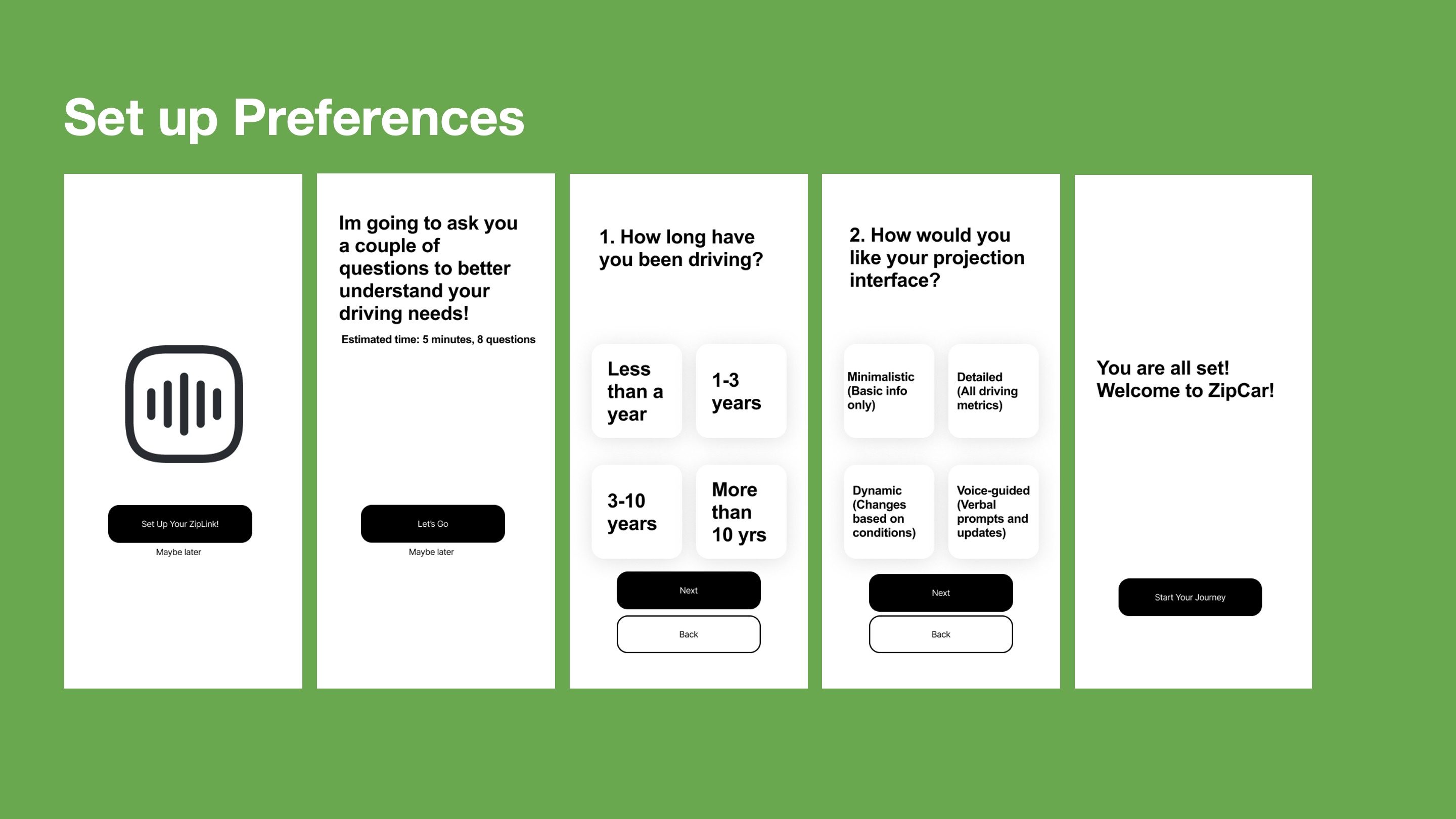
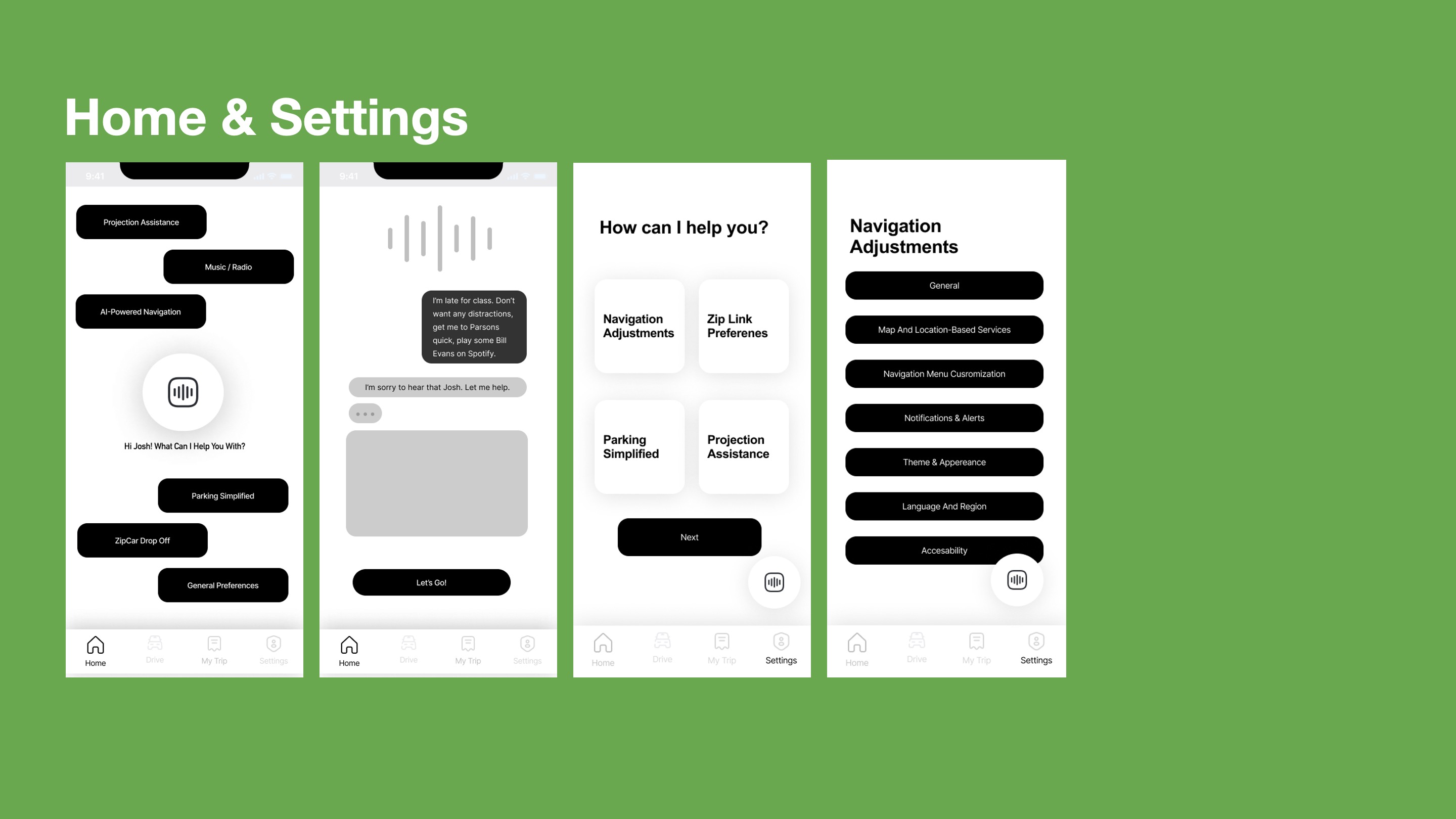
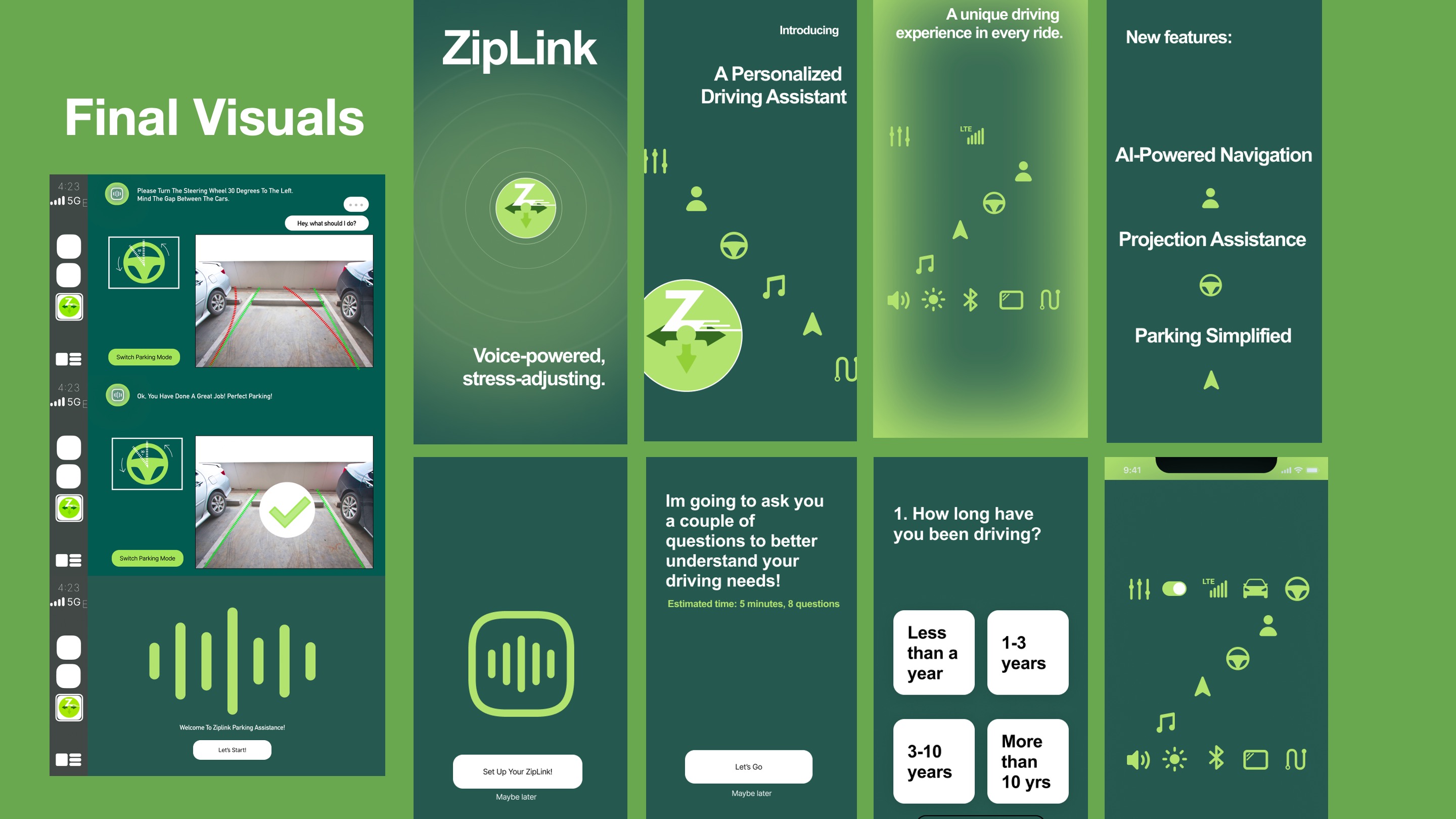
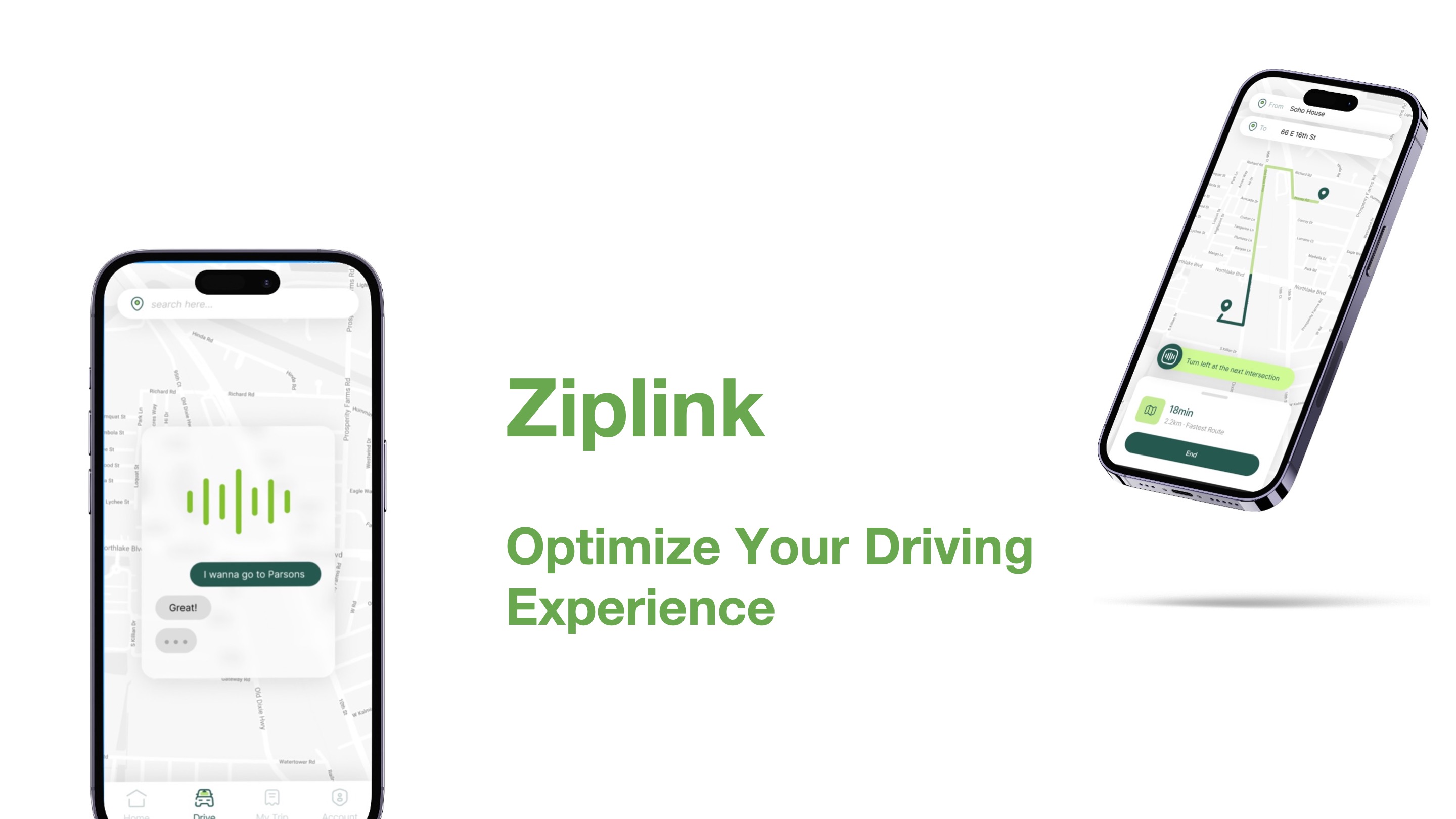
To address these challenges, we propose a comprehensive enhancement of the existing ZipCar app, transforming it into a unified platform that not only simplifies car rental but also integrates essential navigation and AI-assisted driving support. The upgraded app will feature:
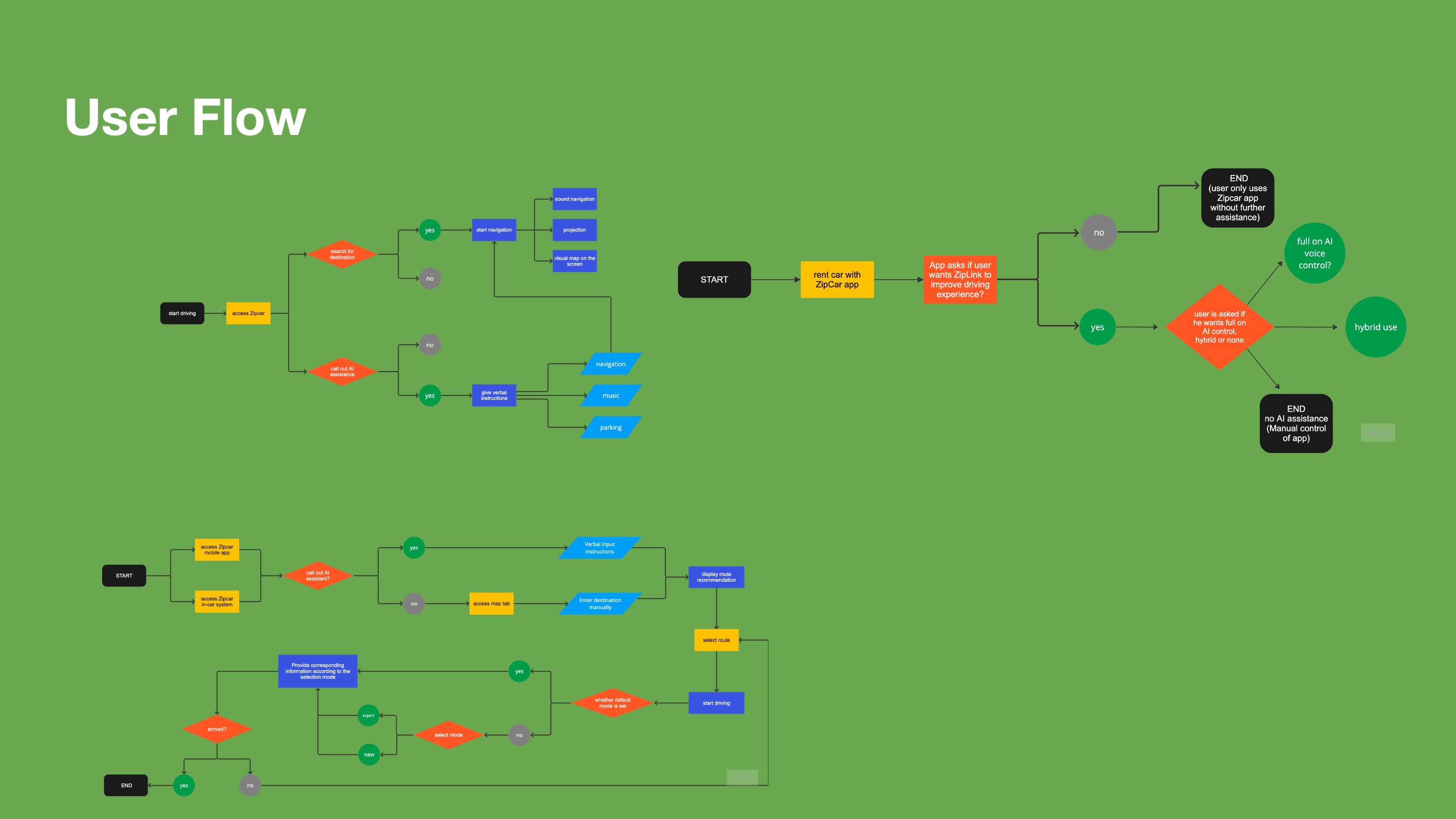
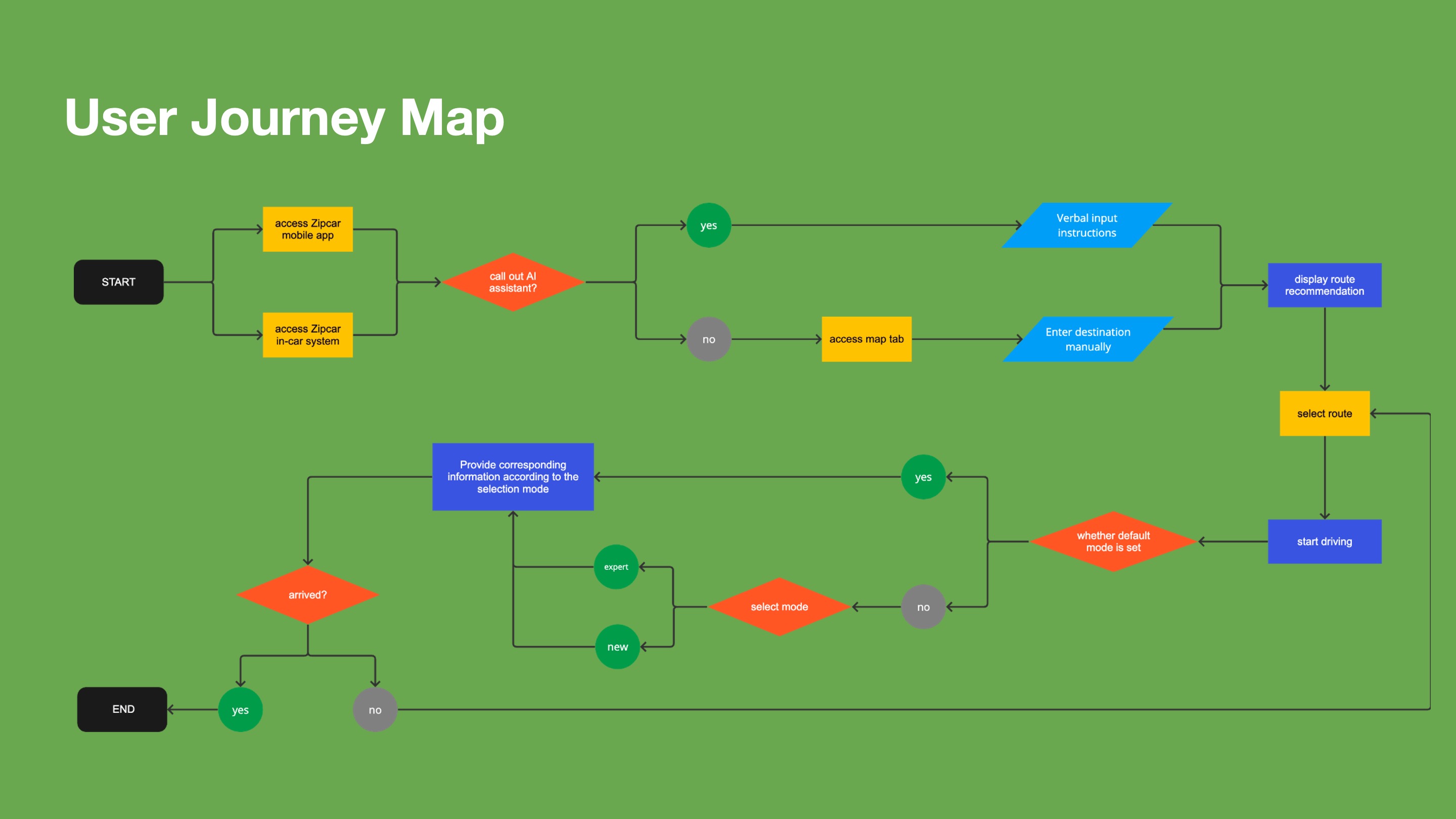
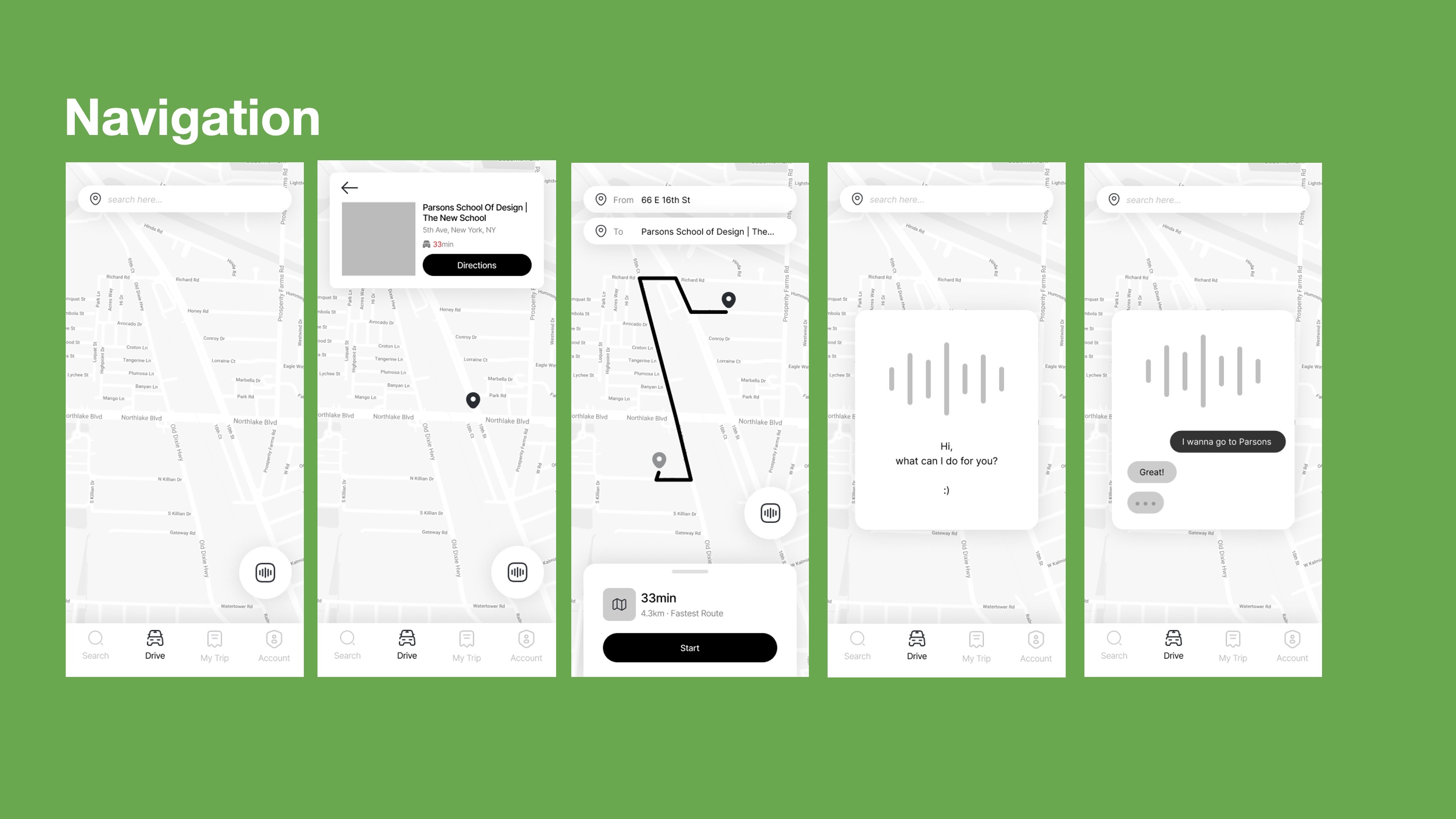
Integrated Navigation: A new navigation feature within the ZipCar app will offer maps, search capabilities, and real-time navigation, eliminating the need for drivers to switch between different apps for directions. This integration aims to streamline the driving process, making it more intuitive and less distracting.
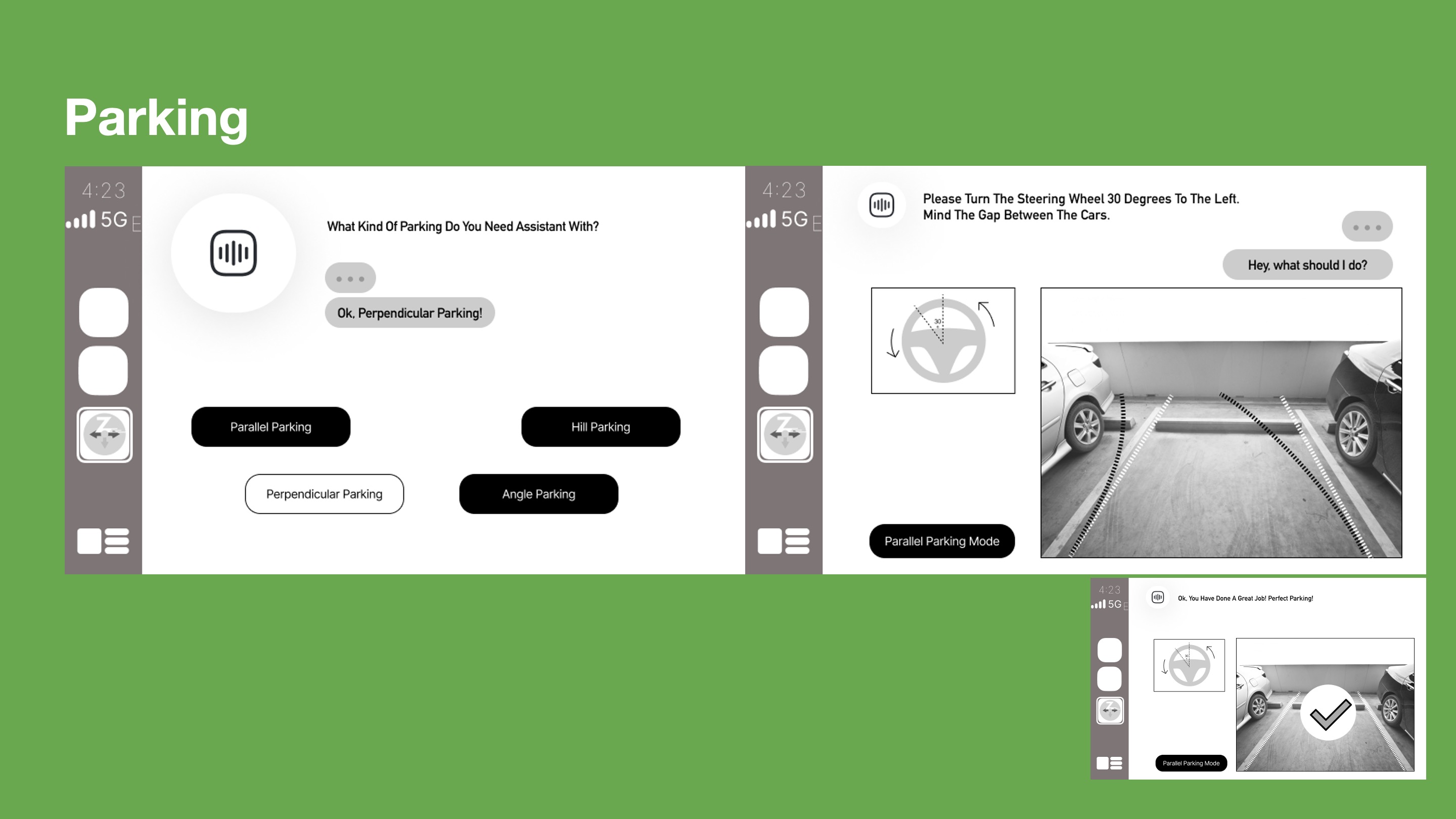
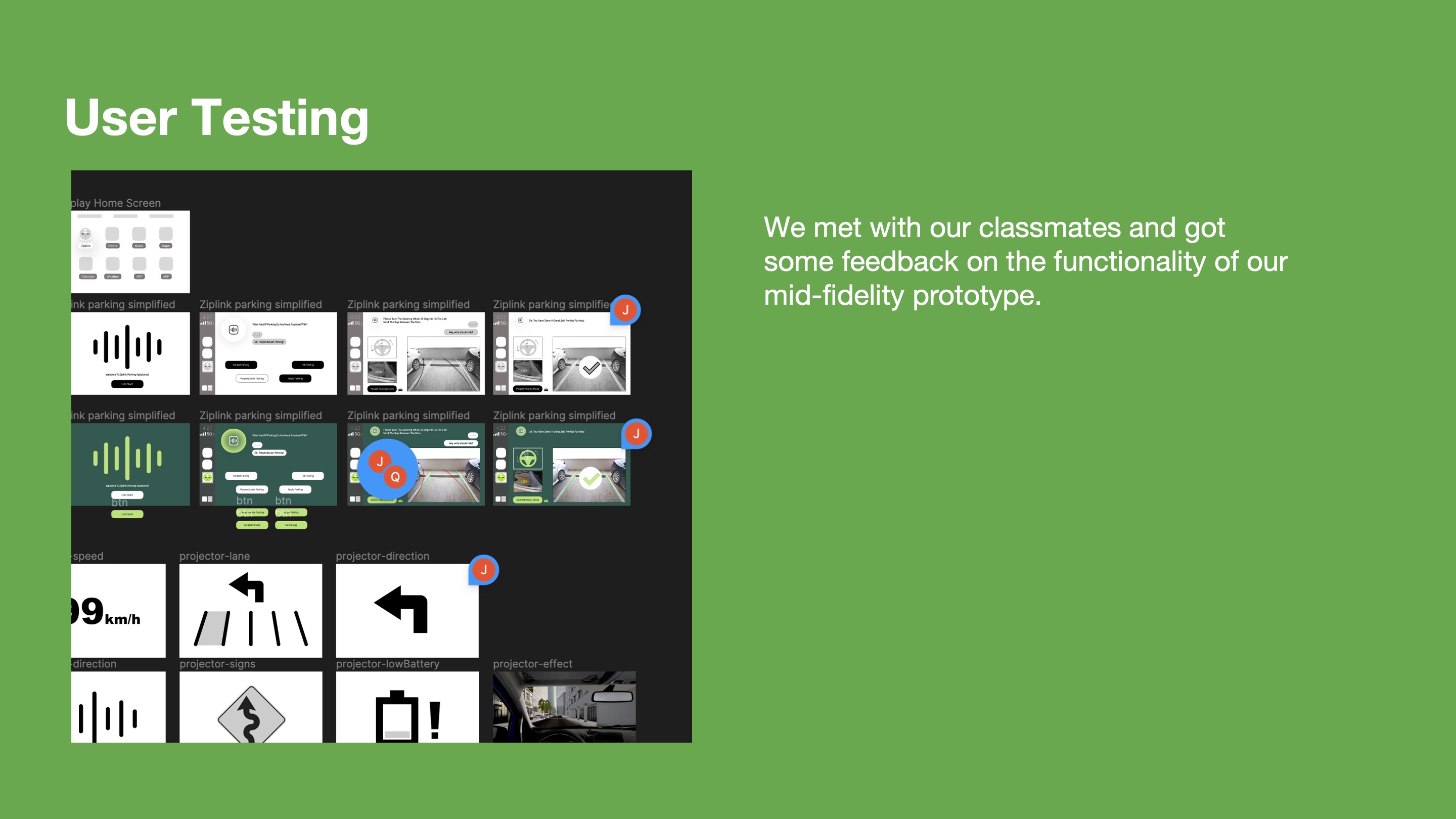
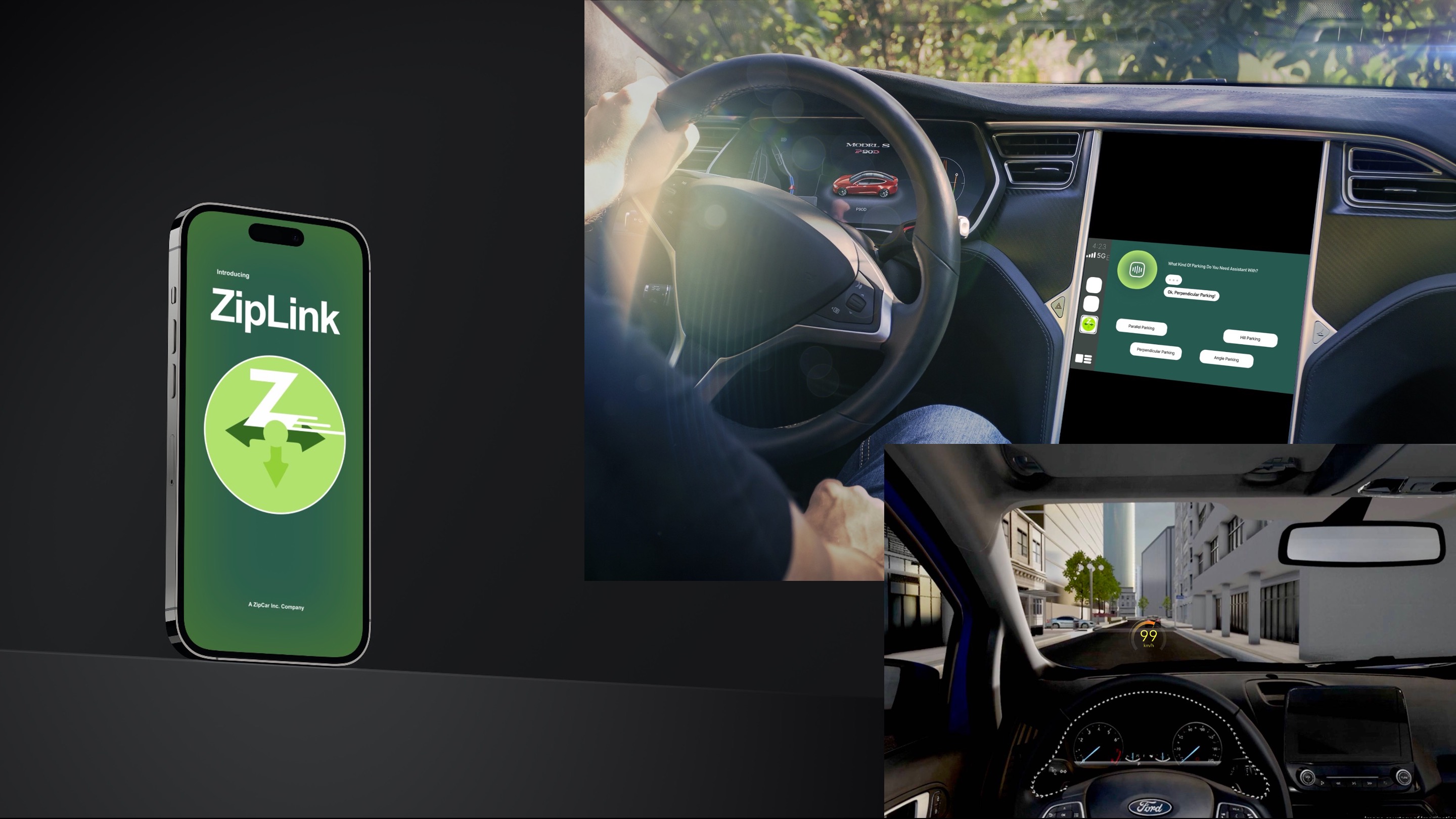
AI Assistant: An embedded AI assistant will act as a co-pilot, providing real-time traffic insights, system interaction support, and proactive driving and parking suggestions. This assistant is designed to adapt to the driver's needs, offering personalized guidance that enhances understanding of traffic patterns and in-car system functionalities.
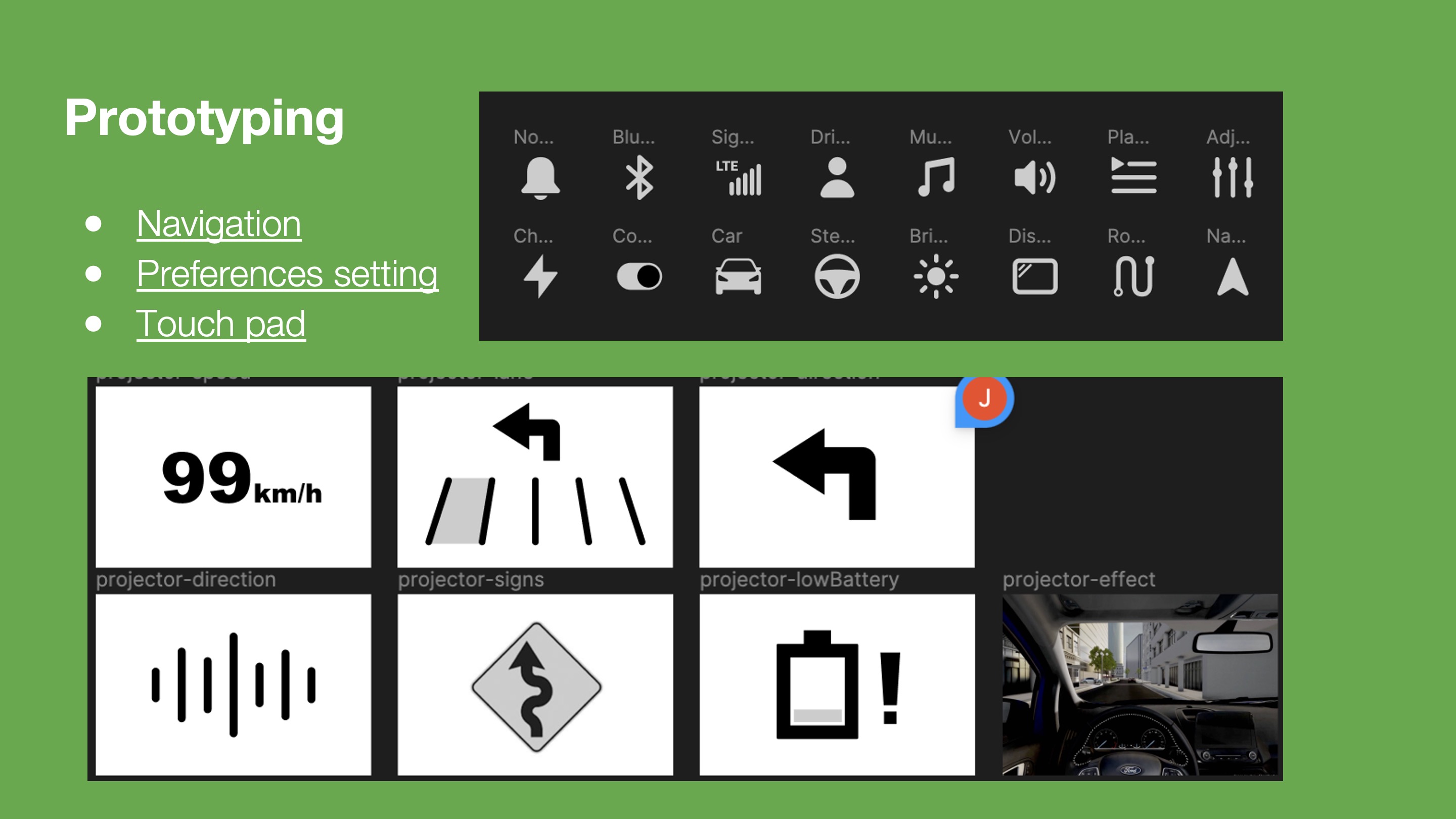
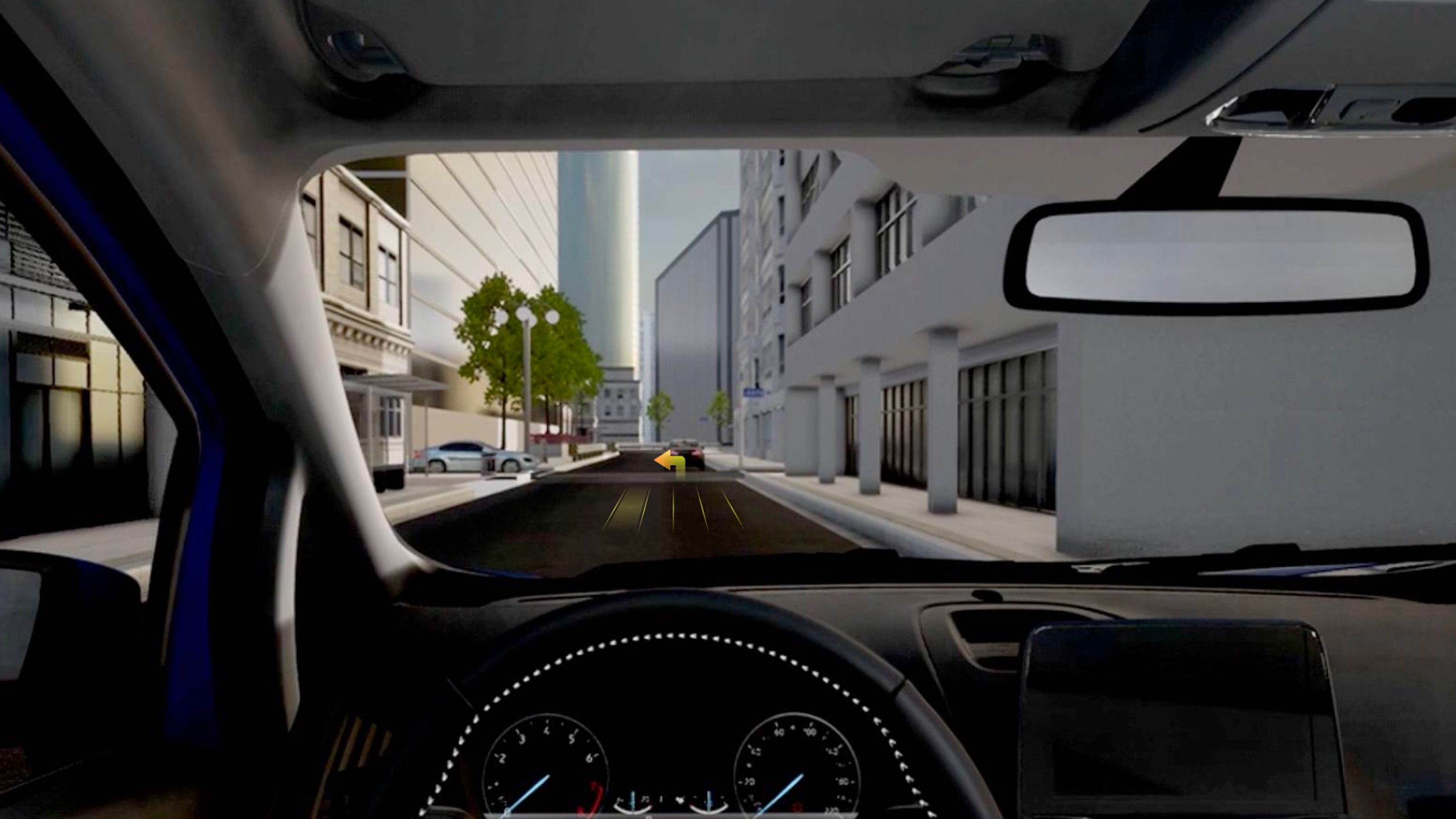
Heads-Up Display (HUD): To further reduce cognitive load and keep drivers' eyes on the road, a small projector will display critical traffic information directly onto the windshield. This feature ensures that drivers can access navigation data without the need to look away from their driving path, significantly reducing the risk of distraction.
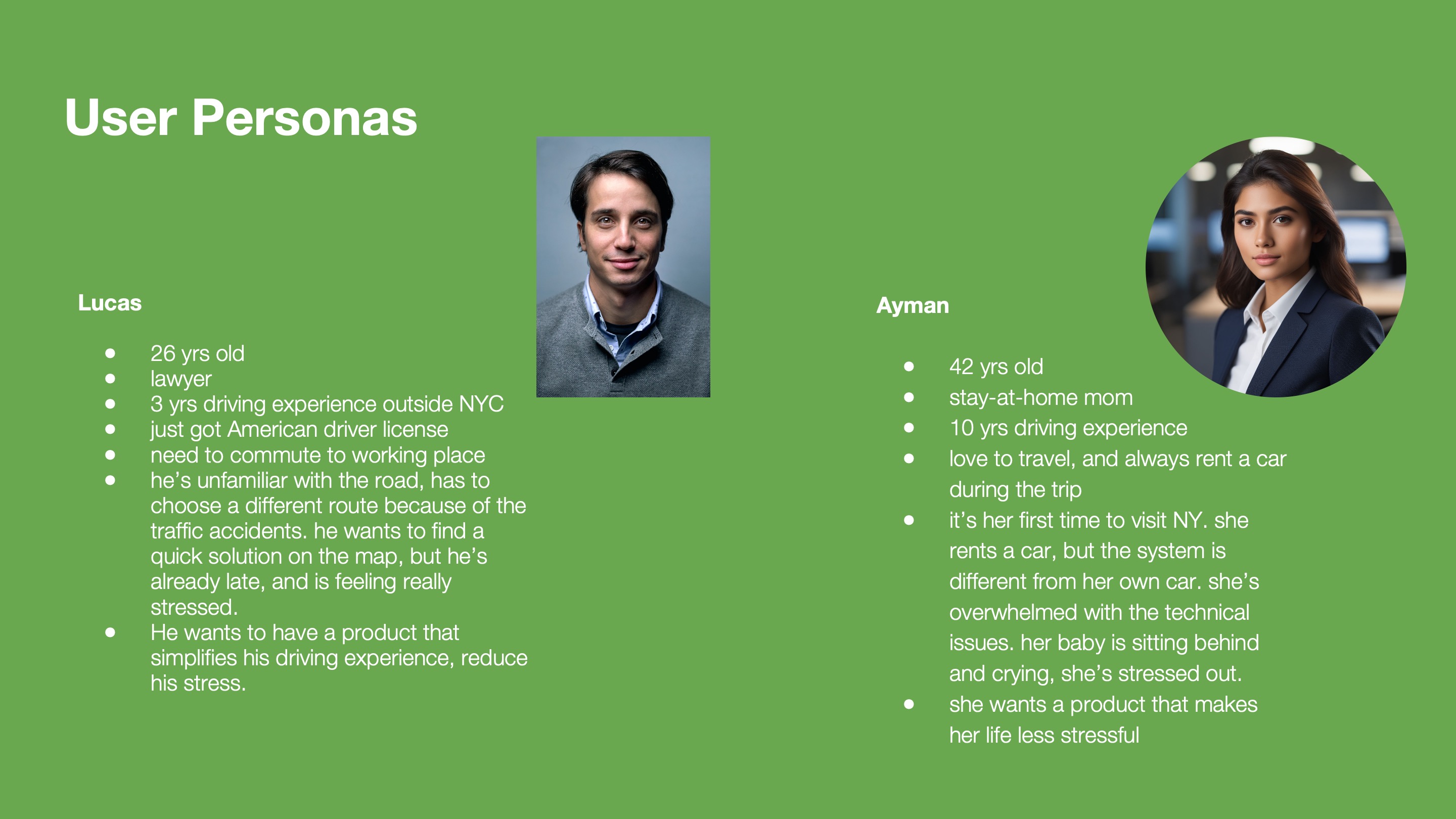
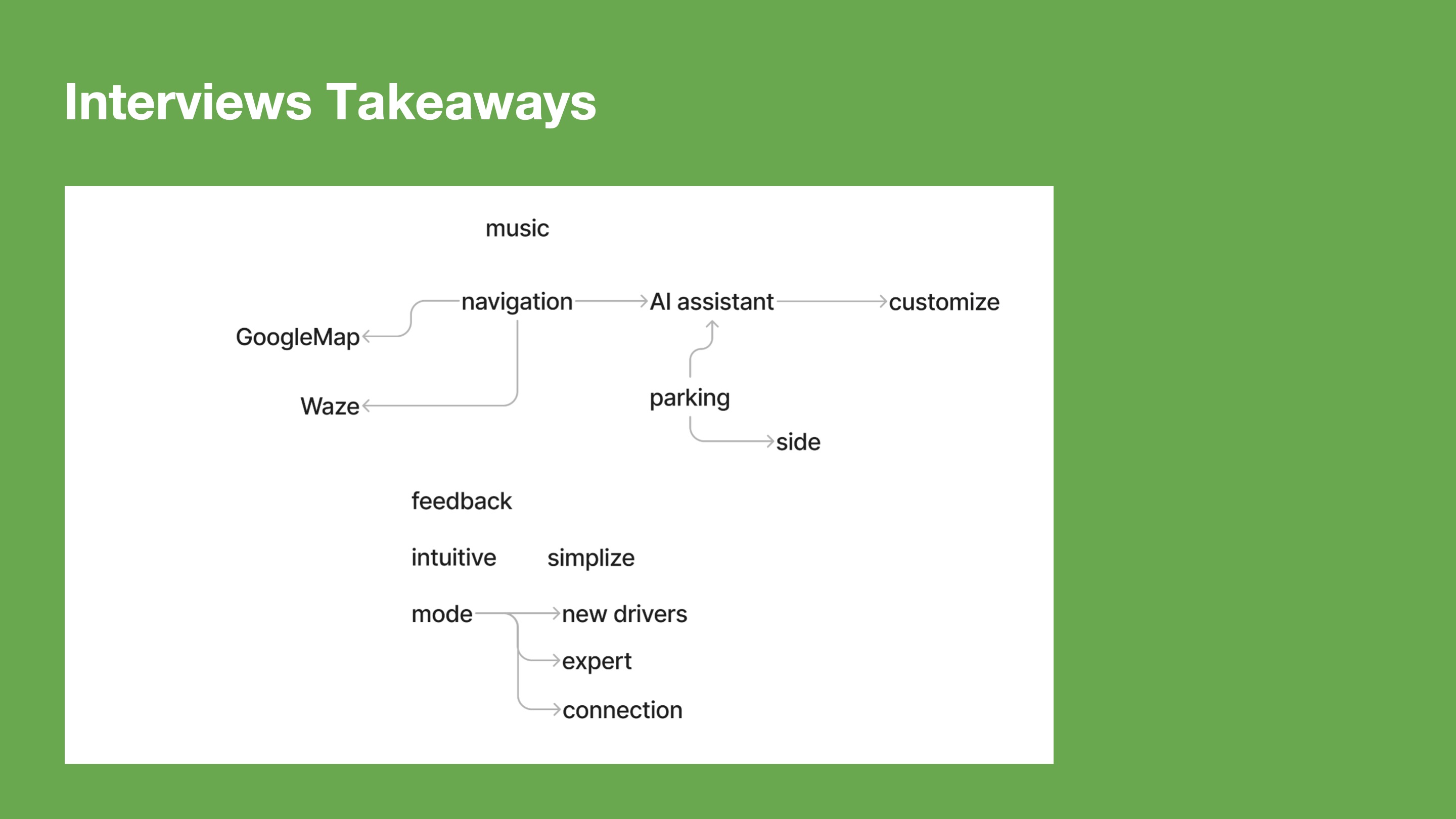
By integrating these features into a single app, we aim to significantly enhance the driving experience, making it safer, more comfortable, and less stressful, particularly for new drivers like Lucas. This holistic approach addresses the core issues identified in our research, offering a practical solution to the problem of driver distraction and cognitive overload in urban driving environments.